

COST EFFECTIVE YET HIGH QUALITY PROFESSIONAL TRANSCRIPTION SERVICES
Accurate transcriptions are not a luxury for professionals in health, legal and business - it is an absolute necessity. As a professional, you expect your dictation to be transcribed exactly, if not better, than your original recording. You also expect it to be delivered to you on-time and within budget. There is no acceptable alternative. Accuracy IS important, however, in any business whether it is for-profit or non-profit SpectraScribe can assure you that your transcription service meets the agreed service level based on accuracy, time or cost. That is why we allocate dedicate resources with trained backups for your transcription service. We realize that you shouldn’t have to spend time or resources to assure the transcript you’ve paid for is flawless. Contact SpectraScribe and check out why we have so many satisfied customers who enjoy our automated, cost effective and timely transcription service.SPECTRASCRIBE PROVIDES…
- Over 10 years of medical, legal and business transcriptions
- Fast turn-around service
- Accurate, fully proofed transcriptions that meet and exceed expectations set by your industry or profession
- Economic & cost effective service that you only pay for what you use
- State-of-the-art work flow technology that is continually being improved to suit our ever expanding international clientele
- A fully scalable and automated process that can match your business by increasing or decreasing transcription volumes.
- Reliable, simple and hassle free so that you can get on with your job
- Guaranteed compliance with most if not all transcription regulations
- Free service trial that can be tailored to suit your business to illustrate our easy to use, reliable fast turn-around service.
the flow of Transcription
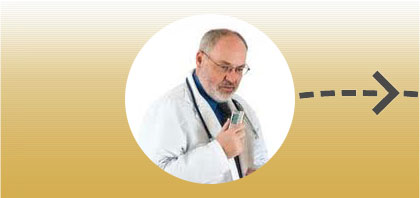


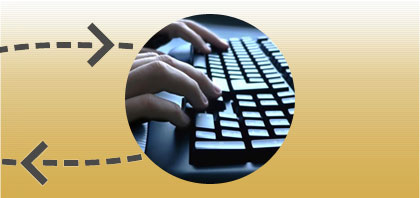

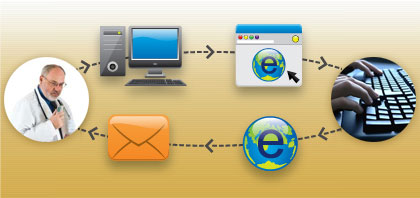
Clear, accurate results
For all our customers - from health to legal and other professionals - we know your clientele demand a consistent high quality of transcribed records. That is why we are passionate in maintaining a high standard in all our services. Our business as well as yours depends on maintaining that consistent high performance.Our continual focus on accuracy and consistency is critical for you and your customers be it patients, clients or business customers. We truly appreciate that mistakes have consequences so we often do double proofing and checking – at our expense - before delivering transcriptions.
At SpectraScribe, we’ll work closely with you to make sure that what you record is exactly what you expect. And if you ask our current customers they’ll agree that we often exceed that expectation.
Contact SpectraScribe today to find out all you need to know about professional, accurate, and cost-effective transcriptions. For our North American customers call at 905-290-1546 or email info@spectrascribe.com, and for our UK customers call 07784 846944.
A/V Transcription Services
Audio To Text Services, Video Transcription Services, Conference Transcription Services, Transcription Services Toronto, Canada SpectraScribe offers audio and video transcription services in Canada. Our teams of transcriptionists are fully capable of keeping track of conversation across a wide range of events. Whether it’s an academic conference, IMEs or a focus group, we can handle it all. There are elements to a speech or a lecture that deeply impact the meaning which was put
Accuracy
The best testimonial to our quality and accuracy is our longevity. We have developed a loyal following after ten plus years in the transcription business. We meet all accuracy compliance requirements. In more than a decade we haveQuality Control
Our overall transcription goal is to accurately and efficiently transform the spoken voice into an accurate, grammatically correct, appropriately organized, medical legal document. We ensure continuous quality improvement to meet the standards and accuracy of healthcare documentation. Exceeding your expectations is al

Local: 905-290-1546
Copyright © spectrascribe.com. All Rights reserved. Sitemap


